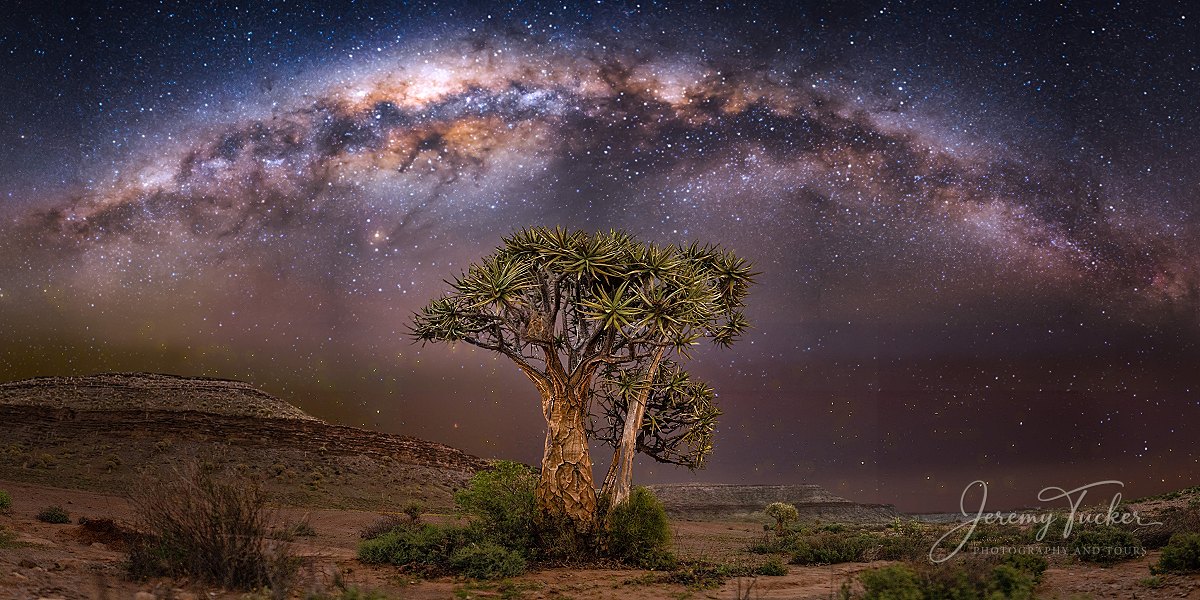
The full arc of the Milky Way over a desert road in the Northern Cape, South Africa.
West Cornwall has some of the darkest skies in England, and on the right night the Milky Way stands up over the coast bright enough to cast the whole scene in silver. It is also one of the most rewarding things you can point a camera at — and, unlike the aurora, it is completely predictable. If you know when the galactic core is above the horizon and you get a dark, moonless, cloudless night, it will be there. Here is how to plan for it, and how to shoot it, whatever camera you own.
The part everyone means by "the Milky Way"
The Milky Way is up every night of the year — it is the galaxy we live in, so it is always overhead somewhere. But the photograph people have in mind, the bright dense band with the glowing centre, is the galactic core, and the core is only above the horizon for part of the year. That is the single thing that decides whether tonight is worth going out.
From Cornwall the core season runs roughly late February to October. In late winter it appears low in the south-east just before dawn; by high summer it is up for most of the night, arcing across the south; by autumn it stands upright in the south-west in the early evening and then sets. Outside that window — November, December, January — the core is below the horizon at night, and you are left with the fainter outer arm. So the real answer to "when" is a season, not a date.
Why Cornwall, and why the far west
The enemy of the Milky Way is not distance, it is light. A faint band of galaxy cannot compete with the orange glow of a town, and most of England sits under exactly that glow. West Cornwall is one of the few corners of the country dark enough to do it properly — the West Penwith peninsula beyond Penzance, the Lizard, and the moors above the north coast are genuinely dark, with the Atlantic swallowing the light to the west and south.
That darkness is the whole reason the astrophotography down here works. Drive twenty minutes past the last streetlight, let your eyes adapt, and the core becomes visible to the naked eye — a smudge of cloud that turns out to be a hundred billion stars.
The moon matters as much as the month
If you have read the guide on the full moon behind St Michael's Mount, this is the exact opposite problem. For the moon you want the moon. For the Milky Way the moon is the enemy — a bright one floods the sky and wipes the core out completely, the same way a town does.
So you are looking for the week or so either side of a new moon, or a night when the moon has set before you start, or has not yet risen. Get the season right, the moon right and the sky clear, and you have all three legs of it. Miss the moon and it does not matter how dark the beach is.
Where to point the camera
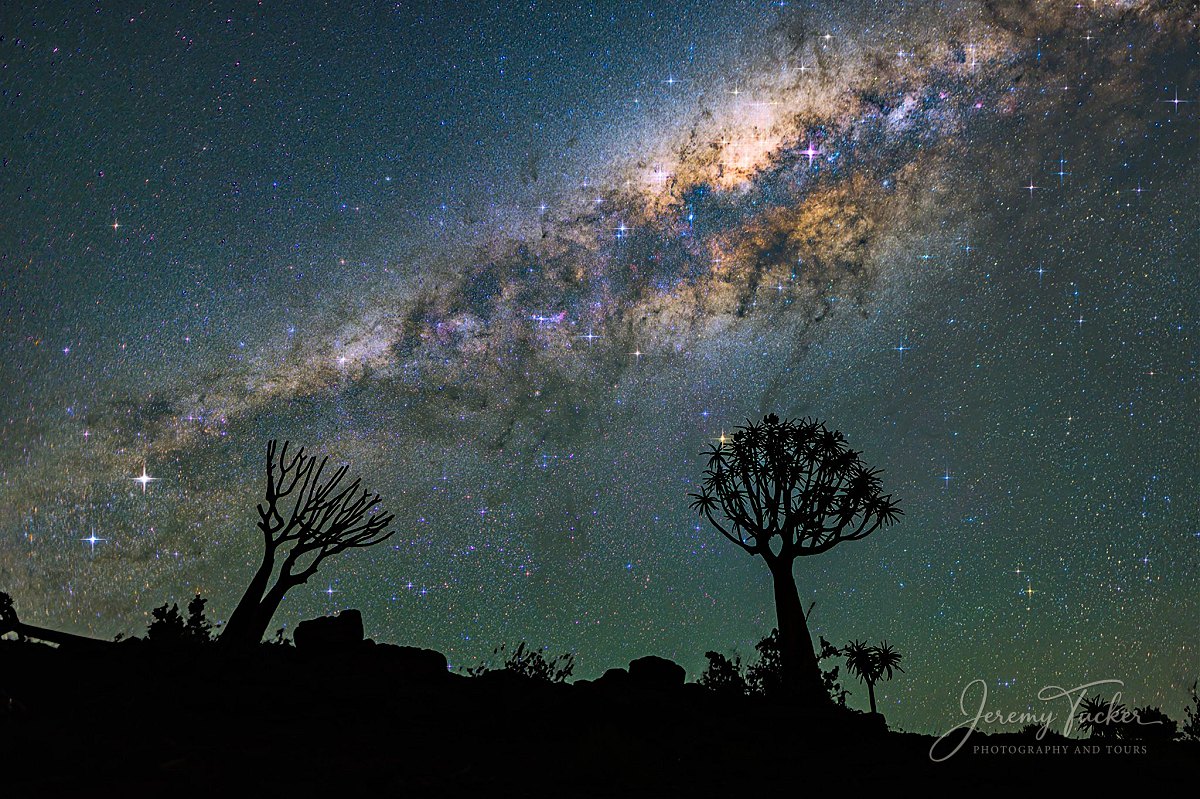
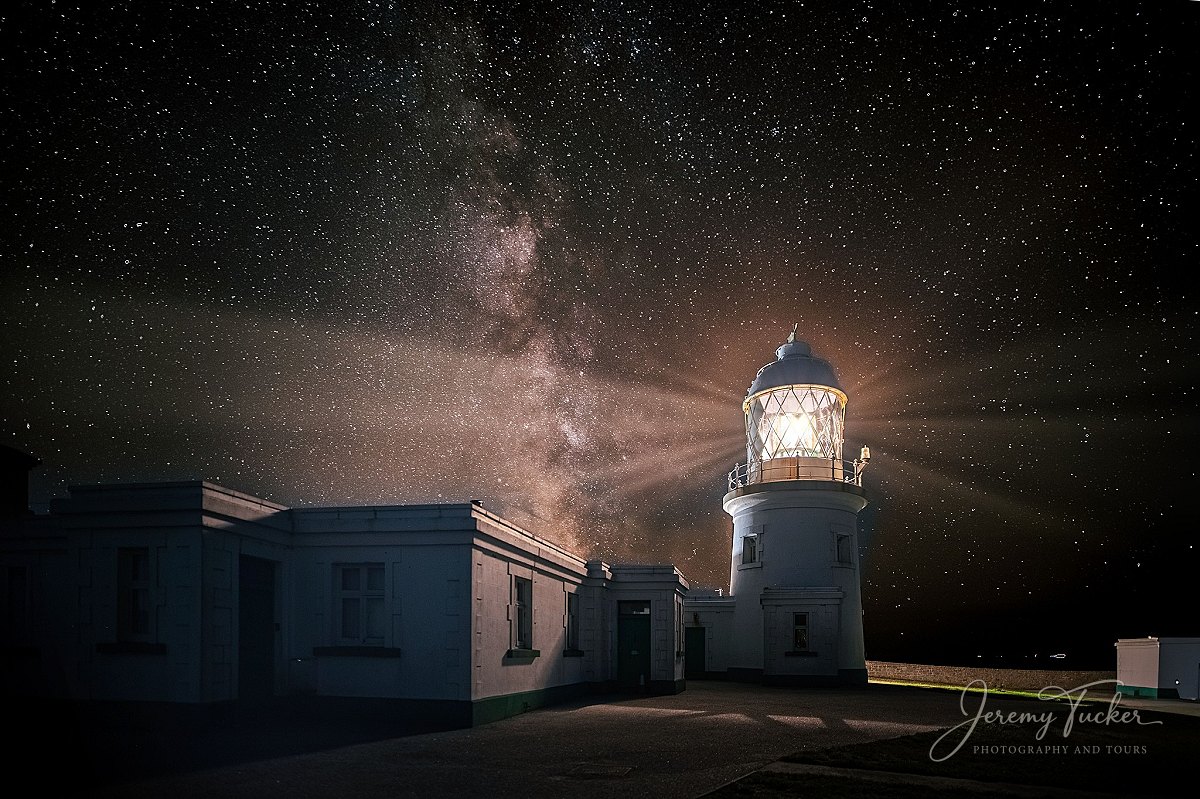
A Milky Way photograph is nearly always better with something in front of it — a bare band of galaxy over a flat horizon is impressive to stand under but flat on screen. What lifts it is a strong dark shape along the bottom: a headland, an engine house, a lighthouse, a standing stone.
Which is where this coast earns its keep. The core sits in the south through south-west, so you want a foreground that faces roughly that way:
Wherever you choose, scout it in daylight first. Finding a clifftop foreground in the pitch dark, near an unfenced edge, is no way to spend the evening.
What you need — and it's less than you think
People assume this takes exotic kit. It does not. The core was shot on entry-level cameras long before it was shot on anything fancy.
The settings, as a starting point
There is a well-known rule for keeping the stars as points rather than short trails, because the sky is quietly moving the whole time your shutter is open. It is the 500 rule: divide 500 by your focal length to get the longest shutter you can use. At 20mm that is 500 ÷ 20 = 25 seconds; at 16mm it is about 30. Go much longer and the stars smear.
Start here and adjust to taste:
| Setting | Start at | Why |
|---|---|---|
| Mode | Manual (M) | The meter can't read a night sky — you set everything. |
| Aperture | Widest available (f/2.8) | Let in as much light as the lens can. |
| Shutter | 15–25 sec | Long enough to gather the core, short enough (500 rule) to keep stars sharp. |
| ISO | 3200 (try 1600–6400) | The dial that makes the faint core visible. Push it until the core shows. |
| Focus | Manual, on a bright star | Autofocus hunts in the dark. Use live view, zoom in on a star, focus until it's a tiny point. |
| White balance | ~4000K, or shoot raw | Keeps the sky a natural blue rather than street-lamp orange. |
| File | Raw | Night skies need lifting in editing — raw gives you the room to do it. |
Focus is where most first attempts fall down. Set it carefully once, in live view on the brightest star you can find, and then tape the focus ring or switch it to manual so it can't drift. A whole night of slightly-soft stars is a heartbreak that is entirely avoidable.
Planning the night: PhotoPills and a clear horizon
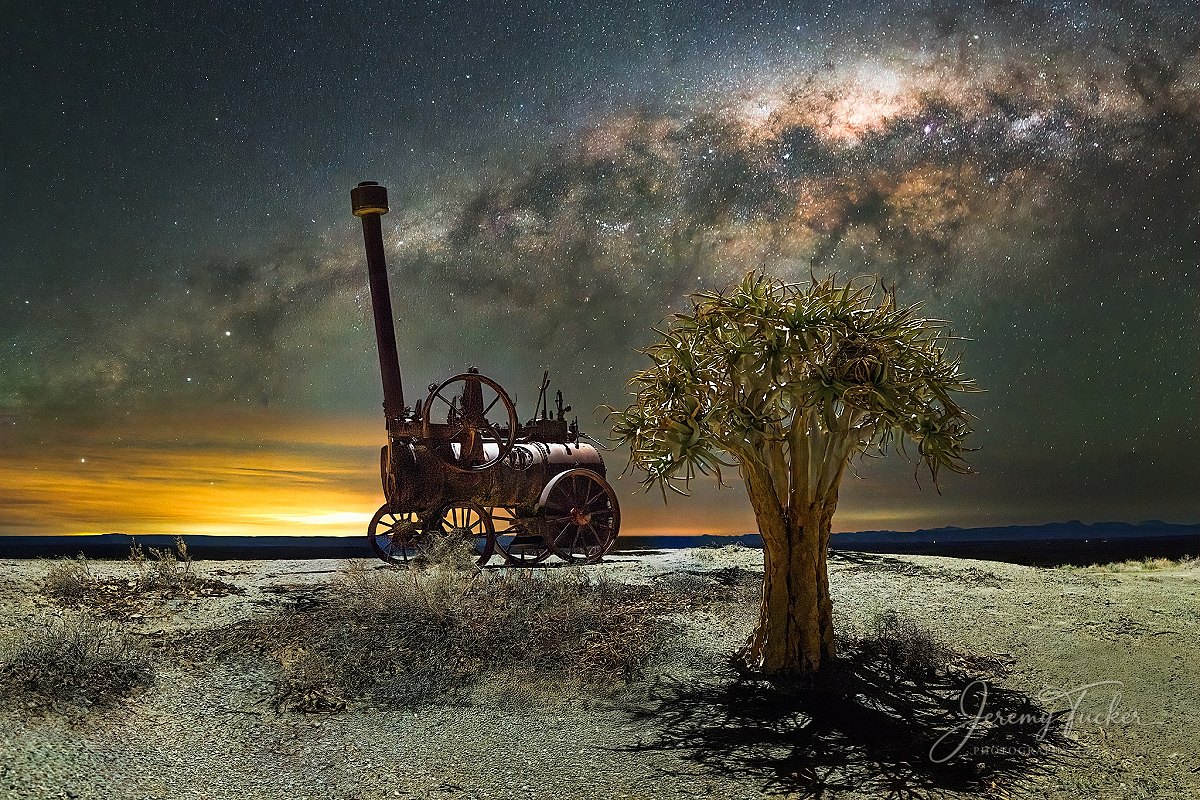
To know exactly where and when the core will stand over your chosen foreground, the app most of us use is PhotoPills (iPhone and Android, bought once, not a subscription). Its Night AR mode lets you hold your phone up to the scene and see the arc of the Milky Way laid over the live view — so you can work out, from your sofa or standing on the cliff, whether the core will sit over the engine house or off to one side, and at what time. It is the same tool the moon guide leans on, doing the astronomy so you don't have to.
The other half is the weather, and specifically the cloud. A clear-sky forecast is worth more than anything for this — a thin high haze is enough to mute the core. Cornwall being Cornwall, you will write off more nights than you shoot. That is simply the deal.
The honest bit
The Milky Way is the most reliable of the night-sky subjects — get the season, the moon and the sky right and it is guaranteed to be there, which is more than can be said for the bioluminescence or the aurora. The knack is in the focusing, the composition and the editing, and that only comes with practice — so go out on the first clear, moonless night of the season and start making your mistakes.